Power Isn’t a Color — But Oxblood Comes Close
Jun 24, 2026 · 2 min read
Ask a room full of professional women what color means power and most will say black. A few will say red. Both answers are right — and both come with a cost.
Black is armor. It protects, it slims, it never clashes. But armor also hides. Worn head to toe, day after day, black can read less like authority and more like an unwillingness to be seen. Bright red is the opposite problem: it doesn’t just enter the room, it makes a demand of it. There are days for that. Most days aren’t those days.
The case for the in-between
Oxblood — that deep, brown-black red of old leather and good wine — does something neither extreme can. It carries the seriousness of black and the warmth of red without the flatness of one or the volume of the other. It reads as considered. And considered is what real authority looks like.
Loud colors ask for attention. Deep colors assume it.
There’s a reason this shade lives in the objects we associate with quiet establishment power: briefcases, brogues, leather chairs, first editions. Wearing it borrows that vocabulary.
How to wear it
If a full oxblood suit feels like a leap, start where the color works hardest:
- Near the face. A scarf or knit in oxblood warms most skin tones where stark black can drain them.
- In leather. Shoes and bags in oxblood are more interesting than black and more versatile than tan.
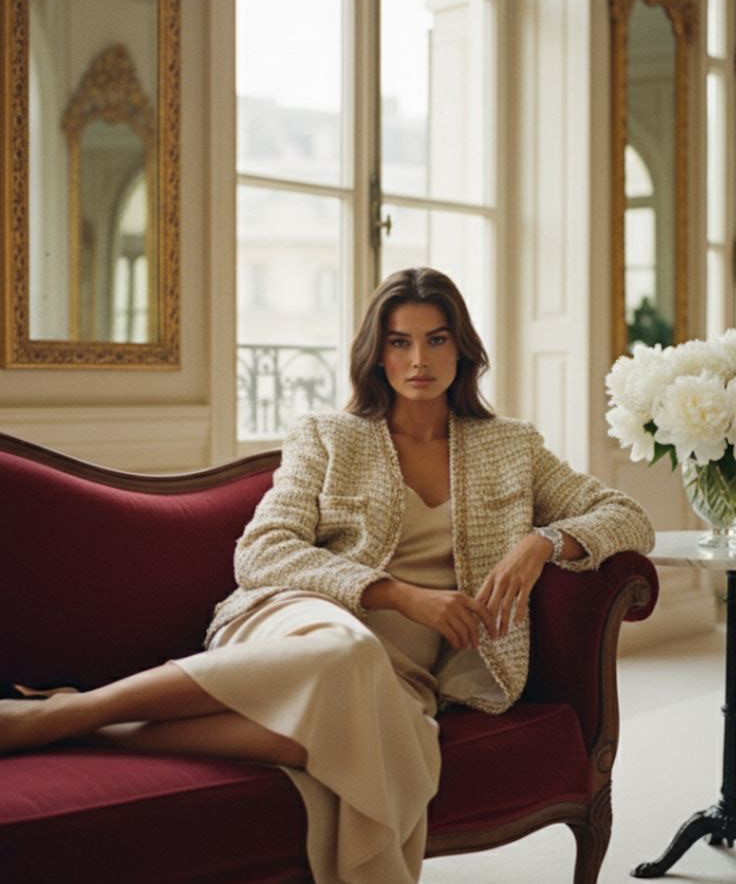
- As the anchor. Pair it with camel, cream, or grey and let it be the deepest note in the outfit.
Color psychology gets oversold — no shade will negotiate your salary for you. But what you wear does set the register of a first impression, and oxblood sets it low, warm, and sure. Power isn’t a color. It’s a posture. Some colors just make the posture easier to hold.